
Preparing Medicine and Seeing a Doctor in Japan
When living away from home, everyone pays attention to health. For example, before a long trip, people usually consider whether they may have trouble adapting to local water and food, stomach issues, colds, and so on, and prepare some medicine.
Coming to Japan is the same. But I noticed a strange phenomenon: people often talk about hay fever. After more than a year here, based on my observation, I have not found even one person who came around the same time as me and developed hay fever.
Later, I saw a more experienced person say that many people develop hay fever around their fourth year in Japan. Mild cases involve tears, runny nose, and sneezing; severe cases may involve headache and fever. It is mainly caused by cedar pollen in spring.
Why around the fourth year?
It is said that after several years, one’s constitution gradually becomes more like that of Japanese people.
Another experienced person said hay fever varies by individual. Some people develop it only after several years because allergic reactions grow year by year and symptoms appear after enough accumulation. He has been in Japan for more than ten years and has never had hay-fever symptoms.
So if you are coming to Japan for the first time, I do not think it is necessary to worry too much or waste time on this. Things far in the future can wait.
What health issues are truly worth paying attention to after coming to Japan? This varies by person, of course. But for small illnesses, two things are almost universal: colds and diarrhea.
Using my own experience, the three health issues I encountered are:
- The symptom that bothers me most often: skin allergies.
- Diarrhea from time to time.
- Long-lasting colds, though unlike in China, they do not make me cough.
Let me talk about them one by one.
Skin Allergies
Perhaps it is my constitution, and my skin has never been great. In China, I also often had unexplained itching, sometimes with spots or rashes. But after coming to Japan, it became routine.
Small allergic reactions happen every few days. Every ten days or half a month, I may need some topical medicine. Every two or three months, something more serious may happen and I need oral medicine.
Here is a typical note:
These two nights my skin has been very itchy. Last night I could not bear it and took cetirizine. I really do not like taking this medicine because it makes my head feel awful. I took it last night, and my head is still foggy now.
I suspect it may have been a type of tofu, or sliced bread containing small grains that looked like rye. I do not like jam, and eating sliced bread often becomes hard to swallow. This bread is chewy, and although it is more expensive, I still buy it.
I will see what happens if I stop eating those two foods.
I do not know exactly what caused it, and I have not gone to a Japanese hospital for this. I brought ointment and oral medicine from China, so compared with colds, this affects my work and study less.
Diarrhea
Diarrhea is also fairly common, roughly once a month. I do not eat randomly, and outside meals I rarely eat snacks or fruit. It usually appears without warning: my stomach suddenly feels uncomfortable and slightly painful, and I have diarrhea several times that day. It usually returns to normal after two days.
I do not know whether it is difficulty adapting to local water and food, or whether food here spoils easily. I have noticed some food goes bad after the expiration date, or even on the same day.
Here is a typical note:
Yesterday morning I had porridge, eggs, and nuts. I did not eat much else.
Later I started having diarrhea several times.
The porridge should be fine. I have been eating the nuts for several days, so they should be fine too. The most likely cause is the egg.
Although I am describing my own situation, this is not an isolated case. People around me, and online comments, suggest it is somewhat common.
I brought stomach medicine and smectite powder from China, but I have barely used them. I have not even opened the smectite powder. So there is no need to worry too much; just know this may happen. This year seems better, with the frequency down to once every two or three months.
One reminder: there are many videos online using half-price supermarket food in Japan to attract attention. But when fresh food is half-price, it is often close to spoiling. Do not deliberately wait around just to buy half-price food out of greed for cheapness.
At first, I also went to different supermarkets with interest to buy half-price items, but they are actually not that easy to find. When I did find them, more than half the ingredients were not in great condition, and sometimes things were already spoiled after opening.
Later, I stopped deliberately buying half-price food. I have not bought any this year. It is not because I became rich; I just feel it is not very necessary. This may offend some people, but after coming to Japan, you can spend a year verifying it yourself.
Colds and Fever
During my first half year in Japan, colds did not affect me much. But in the second half of the year, they wore me down. I was almost constantly catching colds, and it was very uncomfortable.
Here is a typical note:
Yesterday I went out. After returning in the evening and eating dinner, I started feeling wrong again. My knees, shoulders, and other areas had a strange soreness. My throat had already been uncomfortable for two months, but last night it became clearly worse.
Later I slept holding a hot-water bottle, and only today did I feel a bit better.
I think colds happen very easily here. After summer vacation, everyone seems to catch colds repeatedly, including some strong-looking people. Maybe it is because of large temperature differences, or maybe Japan’s natural environment is still relatively well preserved and we are no longer used to it.
Common cold medicines here include products from Taisho and Daiichi Sankyo. I have tried both and feel Daiichi Sankyo works a little better.
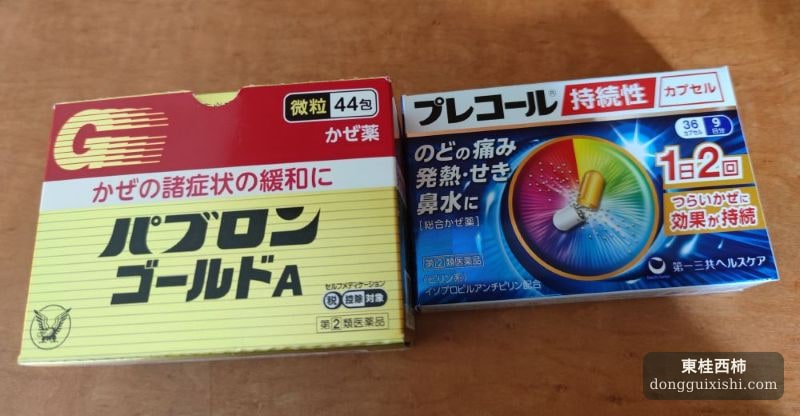
Seeing a Doctor in Japan
After coming to Japan, everyone has at least basic insurance, the National Health Insurance, which covers 70% of medical costs. As far as I know, this reimbursement differs from China: it treats large and small hospitals, outpatient and inpatient care, basically the same.
After receiving company health insurance, you need to cancel the National Health Insurance, otherwise you will continue needing to pay it. With employment-based health insurance, family members can apply for insurance cards without paying separately. In other words, one person pays and the whole family benefits.
So far, I have been to four medical institutions. Japanese doctors and nurses are truly gentle, and I have never seen impatience or a bad attitude.
When I was injured and went to the first hospital, they simply bandaged me without making me register or pay, then recommended another clinic.
Even so, I still hesitate to go to hospitals, mainly for these reasons:
- It takes a long time. For a small recent injury, I went to the hospital six times.
- My Japanese is not good.
- Appointments are usually needed.
Tiered Medical Care
For small illnesses, you generally cannot go directly to a large general hospital. You need to go to a small clinic first. Even at a clinic, you may not be seen immediately and may need an appointment.
Large general hospitals require a referral letter from a clinic. Some hospitals may see you without one, but you need to wait until scheduled patients are finished. You also pay an additional selected medical-care fee. For example, at the Red Cross, it is 11,000 yen.
I suggest changing the habit from China of going to a big hospital, a good hospital, or a top-tier hospital for everything. If you can spend less money, less time, and use less medicine while treating the illness or controlling the symptoms, that is enough. The saying that all medicine has some toxicity still feels quite reasonable to me.
Because most clinics are private, their services vary. I recommend choosing clinics with more nurses. If there are only one or two nurses, and your Japanese is poor and you did not bring an interpreter, they may not accept you. If that happens, they will usually recommend another clinic.
Why does this happen? Because medical consultation in Japan is relatively standardized. Once you see a doctor, they need to understand your overall physical condition, such as whether you have had certain diseases, what you are allergic to, whether there are medicines you cannot take, and so on. They ask in detail. If the clinic feels it is difficult to handle, they may recommend one with stronger service capacity. On the other hand, you will gradually find that Japanese people are also afraid of responsibility.
Costs and Buying Medicine
In terms of cost, people around me have seen doctors for colds, injuries, skin issues, and so on. Overall medical costs are slightly higher than in China. If there are no X-rays or lab tests, after insurance reimbursement, each visit is usually around 200 RMB equivalent.
Medical bills use point units. One point equals 10 yen. Costs are fully transparent, and you can check them through the medical-fee point table, which is updated every two years. I heard Japan is world-class in this area.
Hospitals prescribe very strictly by dosage. If they prescribe three days, it is exactly three days and no more. For small issues, doctors may give you a minimum and maximum amount and let you decide. I recommend choosing a little more, because medicine often accounts for only a small part of the total cost. This avoids making another trip for the same medicine.
Buying medicine at pharmacies also seems different from China. You cannot simply use health insurance directly; you likely need a prescription. I am not completely sure because I have not done it myself.
After this article was first published, an experienced person provided information: after seeing the doctor, the doctor gives you a prescription. The paper with images and usage instructions is the prescription. When you take it to a pharmacy, they check your health insurance card. For insured prescription drugs, you only pay 30%, which is cheaper and more effective than over-the-counter medicine.
Prescription medicine in Japan is genuinely cheap, while over-the-counter medicine is expensive. Pharmacy medicine is often expensive, though some medicines are cheaper there than online. Online shopping is more convenient, and if a pharmacy will not sell something to you, you might try buying online. After filling in some basic information, you may be able to purchase it.