
Early Thoughts on Part-Time Work After Language School in Japan
If your Japanese is not good when you first arrive in Japan, part-time jobs are usually limited to factories. You may be able to get in, but if you can barely speak and cannot understand much, the work can feel uncomfortable. For friends who do not have much money and are planning to come to Japan, I have two suggestions:
- One part-time job is enough at first.
- Outside school and work, put full effort into learning Japanese.
Part-Time Work After Class
Not long after I came to Japan, I did some part-time work in two factories, though not both every day. Let me share my current impressions. First, my conclusion: try to choose factories with more local Japanese workers.
Japanese coworkers almost never take the initiative to talk to you. If you want to communicate with them, they usually do not want to say much either. I think there are two main reasons:
- We are only occasional part-time workers and may stop coming at any time.
- Our language ability is simply too weak. It is similar to China: if someone working in a factory workshop had a better option, they probably would not choose that job either. They are already tired from work, and most people do not want extra mental strain.
Most Japanese coworkers are friendly. If they notice something, they will kindly remind you: if you forget shoes in a place where shoes are required, if your work clothes are not properly arranged for the task, or if you leave something behind. They may even chase after you to return it.
For example, once I had picked up a boxed meal and was about to get chopsticks when someone asked me to move a crate. I forgot the chopsticks. I had just reached the cafeteria when a coworker came behind me and handed them to me. He still did not really talk to me, but I was genuinely touched.
So far, only one Japanese coworker has actively greeted me and shaken my hand the way textbooks describe. But walking around the workshop, it is easy to distinguish Japanese people from people from other countries. When yielding, asking questions, or asking for directions, if they realize you may still not fully understand, and if their current task can be paused, they may personally lead the way.
My First Wage
This was the first wage I received after coming to Japan, and I was quite happy. The work was tiring, but laborers are respected here. Your wages are calculated clearly, and what should be paid is paid proactively.
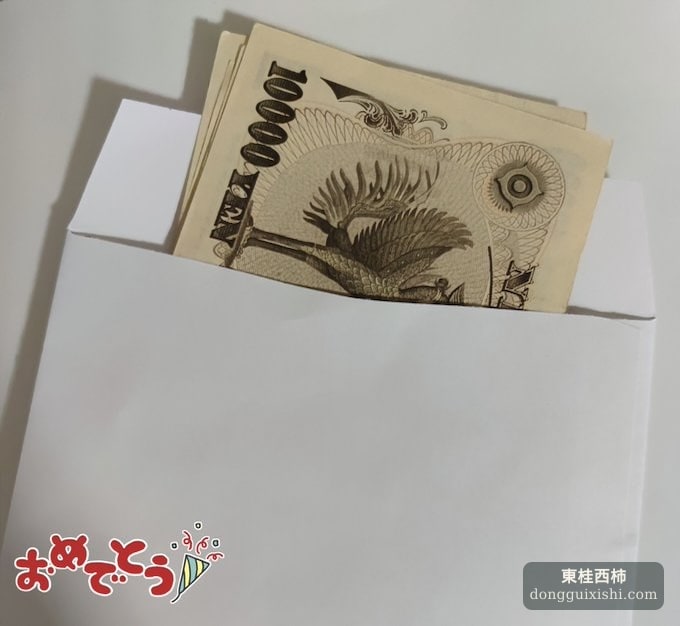
Although earning a high salary in Japan is not easy, the lower limit is relatively well protected. Even ordinary work can bring a reasonably decent income.
Japan’s national holidays are called shukujitsu, often referred to as “red days.” Only June and December have no national holidays. A few points are relatively good:
- There are many of them: 16 days per year.
- There is no compensatory working day system.
- If a public holiday falls on a Sunday, the holiday is carried over to the first weekday that is not another public holiday. This is called a “substitute holiday.”
After working in Japan for a full year, employees receive paid leave. Combined with national holidays and weekends, the total number of days off in a year is quite large. Generally speaking, excluding weekends, ordinary workers in Japan work around 11 months a year, and salaries often amount to 13 months or more.
What is even better is that formal part-time workers can also receive paid annual leave after working for a certain period, perhaps over a span of 180 days. Please check the exact details yourself.
This information may not be completely accurate. I am still learning and will continue updating it.
Part-Time Job Websites
Japan’s part-time-job system is well developed, and it is convenient to find information. There are many websites and apps. Offline, convenience stores, supermarkets, and other places also provide free magazines with job listings.
Well-known platforms include TownWork, Baitoru, and Kyujin Journal Net. These sites are also included in the Donggui Xishi community’s list of practical Japan-related websites, so you can check them there.
Things to Note
If you want to take a formal part-time job, you may need to obtain a residence certificate. Bring your residence card to the city office, fill out a simple form, and ask them to include your My Number on the certificate if the employer requires it. The information printed on a residence certificate differs by purpose, so check what the employer needs. Then wait for it to be issued.
If there are not many people, the certificate is issued quickly. Check the information, pay around 300 to 400 yen, and that is it.
Now you can also use your My Number card at a convenience-store machine to issue it. This is more convenient and cheaper, only 150 yen per copy. So after coming to Japan, remember to apply for your My Number card early.
About the Residence Certificate
Shortly after arriving in Japan, you will usually receive a letter related to the residence certificate. When you need the certificate, go get it then. There is no need to prepare it in advance, because, as mentioned above, different situations require different printed information.
Also, do not assume that printing all information is best. If the certificate includes more information than the receiving party is allowed to accept, they may not dare to take it.
Another point is validity. Many situations require a residence certificate issued within the past three months. If more than three months have passed, you will usually need to obtain a new one.