
Getting Around Japan with Suica
If you live or travel in Japan, trains are hard to avoid. There is a lot of information online that makes taking trains sound complicated, but in practice it is not that difficult. For daily travel, Google Maps or Yahoo Transit is usually enough.
For example, search from one station to another, check the routes, and choose your ticket based on time and price. You do not need to worry too much about what exact type of train it is.
Here is one of my personal little tricks: when you arrive at a station, if you are exiting, walk to the right; if you are transferring, walk to the left. This is especially useful at large stations.
JR in Japan
Japan’s JR network is very developed. JR stands for Japan Railways, the country’s major railway group. It was formed after the privatization and division of the former Japanese National Railways in 1987. JR has several regional companies covering most of Japan and operates many urban and suburban trains, including the famous Shinkansen. For both daily commuting and travel, JR is one of Japan’s most important transportation systems.
After coming to Japan, I have not traveled much and still have not taken the Shinkansen, so my knowledge of transportation is still limited. Today I will simply share information about applying for and replacing one well-known transport card: Suica, issued by JR East.
Applying for a Suica Card
At the station, look for a machine like the one shown below. You can apply for a card directly from the machine. It is quick and convenient, and the whole process takes only a few minutes.
Suica cards can be registered or unregistered. Applying for the card itself is free, though there may be a handling fee when you return it, as explained later. The process below is for a registered card.
You enter four pieces of information: name, gender, date of birth, and phone number. Then you charge the card with money. Add only what you need at first; I do not recommend charging too much at once. After a short wait, the card is printed.
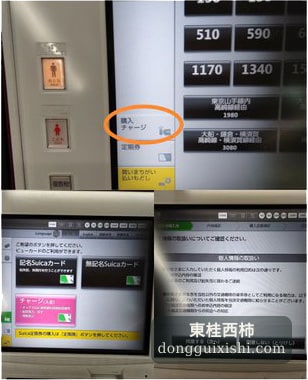
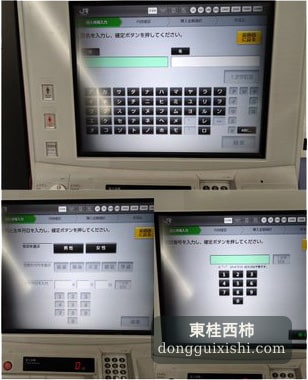
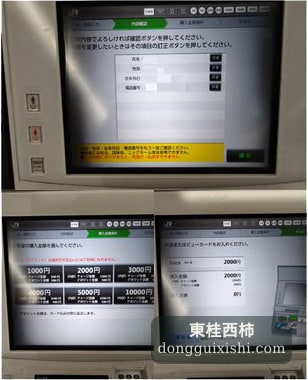
The advantage of a registered card is that it can be reissued if lost. I will explain that later, because I have lost one myself.
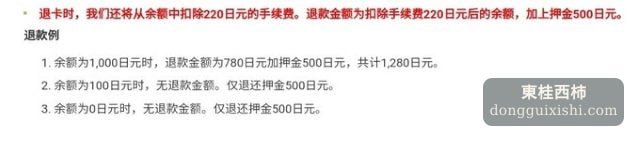
This long-term card has a 500-yen deposit, which is returned when you return the card. According to the explanation below, if there is no balance left on the card, the 220-yen refund handling fee is not charged. This shows how detailed Japanese services can be: the deposit and remaining balance are treated separately. Refunding the balance may involve a fee, but refunding the deposit does not.
Other Ways to Apply
You can also apply directly through the app and use Suica without a physical card.
Reissuing a Suica Card
If you lose an unregistered Suica, it is simply gone. Only a registered Suica can be restored. In Japanese, this is called reissue.
Once you realize your card is missing, go to the relevant station counter as soon as possible to report the loss. You fill out a simple form and show your residence card. The card cannot be reissued on the spot. You can receive the replacement from the next day onward, within 14 days, so you need to decide which station you want to pick it up at. If you do not specify, it defaults to the station where you applied.
If you do not complete the reissue within 14 days, you need to apply again. When receiving the reissued card, you pay a 1,020-yen fee.
The terms I use above, such as reporting a loss and replacement, are the way we might describe it in Chinese. In Japan, the actual process is simply applying for reissue and receiving the card.
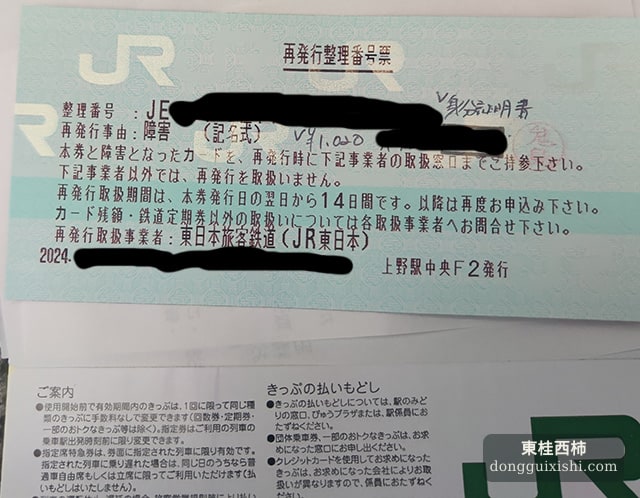
If you are worried about losing the card, you can install Mobile Suica on your phone. It has been a while, so I do not remember every detail, but I think you enable NFC and scan your Suica. If your phone supports it, the card can be linked successfully, and then you can tap your phone to ride trains. Not every phone supports this; my current phone does not.
Another benefit is that the 500-yen deposit is returned immediately. I do not know whether this is still the case. If it is, I still do not fully understand the logic of charging the deposit for the physical card.
A Small Episode
My phone has two SIM cards, one Japanese and one Chinese. The Chinese number still receives messy calls almost every day, so I clean my call history from time to time.
The evening after I lost my Suica and got a replacement, I was clearing my call history when a recent call that rang only three times caught my attention. Looking carefully, I realized it was a Japanese number, and it had called about two hours after I lost my Suica. I checked and found it was a station number. Then everything made sense: I must have dropped the Suica shortly after tapping through the ticket gate at that station.
So if you lose a Suica, while reporting the loss, remember to watch your phone. You might get it back quickly.
Why did I not answer the call? A few extra thoughts:
- I was handling something that day and had set my phone to silent. Some people may wonder: silent mode still vibrates. Yes, back home I usually left vibration on, but in Japan I often need true silent mode, and sometimes even vibration is not appropriate, so I turn vibration off too.
- Because I use both a Japanese number and a Chinese number, and the Chinese number receives too many spam calls, I became less sensitive to missed calls.
- My suggestion is to use separate phones for Japanese and Chinese numbers if conditions allow. My Japanese number had not received any spam calls when I first wrote this article. Even now, there are some, but very few. For SMS messages, be careful: if an unfamiliar message contains a link, do not click it.
- Japanese phone calls are also hard to catch. As far as I remember, all my missed calls in Japan rang only three or four times. Modern smartphones also seem slow to respond to ringing or vibration. Often, just as you pick up the phone, the other side has already hung up. I do not know whether Japanese phones perform better. Otherwise, I really cannot understand why people here seem to hang up almost immediately after calling.
Other Uses for Suica
Suica is not just a transport card. You can also use it for shopping. Many stores support Suica payments, and some vending machines do too. I have used Suica to buy things, and it is quite convenient: the store enters the amount, and you tap the card. For people who find coins annoying when they first arrive in Japan, Suica can help ease that transition.
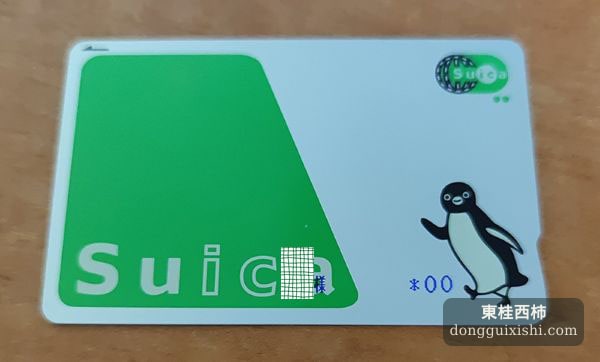
After all this talk, Suica should finally make an appearance. The image below shows my second Suica card.
Shinkansen Support
Because I have not taken the Shinkansen, I had only heard that Suica cannot be used directly to ride it.
The Shinkansen EX reservation app does support Suica ticket gates. After booking your ticket, you can tap your Suica to transfer from conventional lines through the gate to the Shinkansen.
Points Tip
You can link your Suica card with the JRE POINT app.
Points are accumulated based on spending. Regular conventional lines give about 2% back in points.
Accumulated points can be charged back to Suica at a 1:1 ratio.
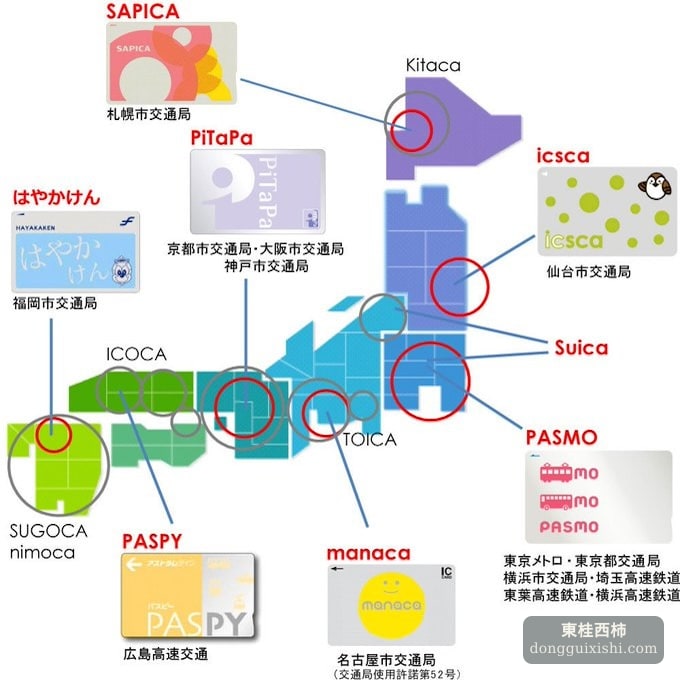
Overview of Transport Cards in Japan
Note: Some content in this article was supplemented by Tetsu, a friend on X living in Japan.