
A Practical Yen Exchange Guide for Studying in Japan
It is again the peak season for students coming to Japan, and the topics of how much yen cash to bring and when to exchange yen have become lively again. When I came to Japan last year, I brought 300,000 yen. The exchange rate from RMB to yen was about 1:19.6. Looking at today’s UnionPay rate in the image below, it is roughly 1:20.8.
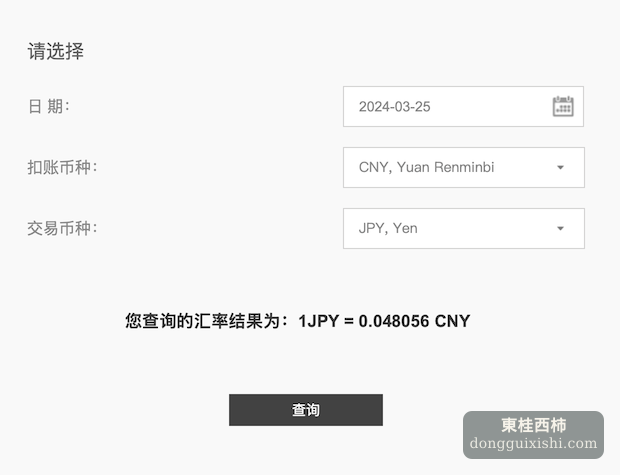
Let us calculate it: (20.8 - 19.6) / 19.6 ≈ 6%. In other words, the yen has fallen by about 6% over the past year. If I exchanged the same amount of RMB today, I could get around 318,000 yen: 30 / 19.6 * 20.8 ≈ 31.8.
Exchanging Yen in China
Exchanging yen in China is fairly simple. Use whichever bank you normally use and make an appointment for foreign-currency exchange. I will briefly describe what I did.
I used ICBC. First, I purchased foreign exchange through the ICBC app. You do not need to buy the full amount at once; you can purchase in several batches depending on the exchange rate. When you need cash, make an appointment with a branch. After the appointment is confirmed, wait for the branch to notify you to pick up the cash at the counter.
Pay attention to timing. It is best to leave about one week before your departure date.
Withdrawing Yen in Japan
In Japan, you can conveniently use a UnionPay card to withdraw yen directly from ATMs at convenience stores and major banks. Convenience stores such as 7-Eleven and Lawson support this. I have not paid attention to FamilyMart, but it may also work. For banks, Japan Post Bank and Sumitomo Mitsui Banking Corporation support it.
The withdrawal limit per transaction varies. Lawson and Japan Post allow 50,000 yen. 7-Eleven and Sumitomo Mitsui allows 100,000 yen. I mainly use Mitsui Sumitomo, and I only use 7-11 occasionally, so I’m not very familiar with the others.
Cash withdrawals have fees. On the Japanese side, the fee is often 75 yen or 110 yen. Sumitomo Mitsui charges 75 yen per transaction, while 7-Eleven charges 110 yen. The fee is deducted directly from your UnionPay card. Domestic banks may also charge a fee, though some cards waive it. I will mention that later.
Another point to note is that ATMs in Japan are not always available 24/7 like many ATMs in China. Some are, but different time periods may add extra fees. So try to withdraw cash during normal Japanese business hours.
If your UnionPay card has overseas withdrawal enabled and the ATM does not work after inserting the card, do not panic. It is often because of the time period. Do not worry too much about the machine’s prompt.
International Credit Cards and Foreign-Currency Cards
International credit cards issued in China, such as Visa, Mastercard, or JCB cards, are not very cost-effective in Japan because the exchange rate often goes through two conversions, using the US dollar as an intermediary between RMB and yen.
In addition, RMB has offshore and onshore rates. Based on nearly a year of my own spending data, the exchange-rate loss is around 3%. Because of this, I do not think it is necessary to insist on bringing an international credit card. Alipay or WeChat Pay can be more cost-effective. If you need to bind a credit card for online shopping, then there is not much choice; you can only accept the small loss. One reminder: JCB credit cards issued in China may have the JCB logo, but their usable range may be worse than Visa or Mastercard.
As for foreign-currency cards, such as the popular Great Wall cross-border international debit card, you can get one if you are able to apply, because cash withdrawals may waive the domestic-side fee. But there is no need to obsess over it. In practice, these cards are not very convenient. In China they are treated like overseas cards, but overseas they may not be treated like normal overseas cards either. Depositing money into them is also not flexible. I have one, but to be honest, I have never used it in Japan.
Basic Exchange-Rate Knowledge
When coming to Japan, one person can carry up to 1 million yen in cash at a time. If you understand a little about exchange rates and trading, I think exchanging 1 million yen directly now and bringing it over is also reasonable, since the rate has been consolidating above 19 for a full two years. If the exchange rate were not like it is now, I would not recommend bringing too much yen cash. Around 300,000 to 500,000 yen would be enough.
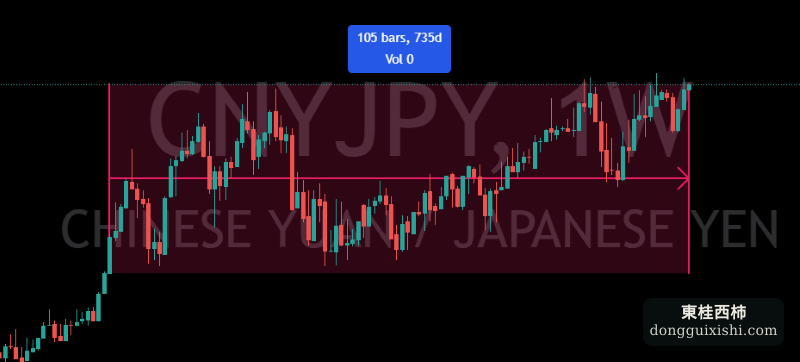
I only know a little about exchange rates, but during my time in Japan I found that many people know even less. With today’s technology and information so developed, quite a few people still get taken advantage of when exchanging currency. That is why I think it is worth sharing this information.
UnionPay Rates
As mentioned above, RMB has offshore and onshore rates, so when checking exchange rates, we do not need to care too much about real-time exchange rates on trading platforms. Those are only references for cash withdrawals.
When withdrawing cash, we still need to refer to the UnionPay exchange rate. The UnionPay system updates the JPY exchange rate every weekday at 11:00 AM Beijing time. On Saturdays and Sundays, the Friday rate continues to apply.
When using a bank card with the China UnionPay logo in Japan, the same “China UnionPay exchange rate” applies regardless of which bank issued the card.
Once you know the rate, if it’s within 50,000 yen, it does not matter much where you withdraw money, because the Japanese ATM fee mentioned above is only around 75 to 110 yen each time. The difference between banks is only about two Chinese yuan.
Overseas ATM Withdrawal Fees
There is also a fee charged by the domestic bank. Different banks charge differently. In general, the big four banks charge pretty high fees, but many banks offer free withdrawals.
Sending Money Back to China
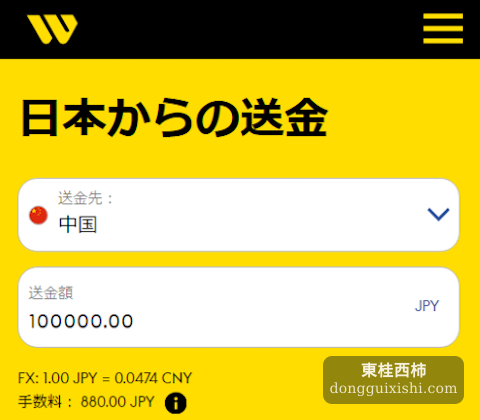
The real-time exchange rate mentioned above is not directly tied to yen cash withdrawals, but it is directly related to sending money back to China. For example, many people use Western Union. In today’s screenshot below, you can see that the rate is basically close to the real-time rate.
Now let us compare Western Union with Sumitomo Mitsui to understand the difference I mentioned above. The following data is from September 15 to 16 last year.
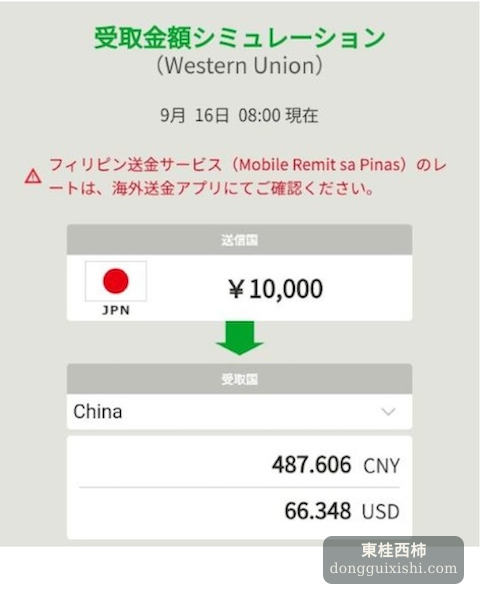
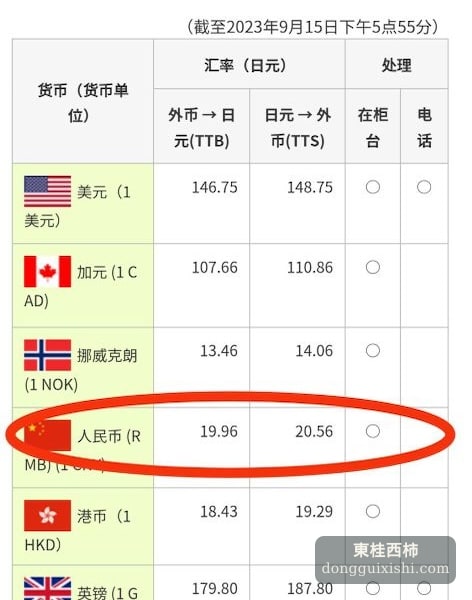
From the image above, you can see that Sumitomo Mitsui’s RMB-yen exchange spread is about 3%.
Closing Note
If you have just come to Japan to study, even if you do some part-time work, it is normal for your family to support you with 100,000 to 200,000 yen per month.
So it is useful to understand a little of this knowledge. Knowing when to withdraw more money and when to withdraw less may not change everything, but relatively speaking, saving an extra 1,000 or 2,000 yen for a good meal is still nice.