
Summer Notes from Japan: Survival Wisdom and Everyday Moments
After several straight days of heat, I wake up each morning already feeling stuffy and dizzy. Today I scrubbed the balcony with great effort, and for a moment I imagined lying there on a summer night, looking up at the stars the way I did as a child.
Of course, cleaning the balcony just so I could sleep there was only a joke. The real reason was that I noticed a lot of dirt in the drainage channel, along with some standing water. It looked like the perfect place for mosquitoes to breed, so I decided to clean the whole balcony. Consider it my small ritual for welcoming midsummer.
Tanabata Festival
Today is Tanabata in Japan again. In many places, people hang bamboo branches as part of the tradition. These branches are called sasa in Japanese, and people hang tanzaku, strips of paper with wishes or blessings written on them. They also hang decorations made from colored paper in the shapes of boats, horses, cranes, and other forms. These are called Tanabata decorations.
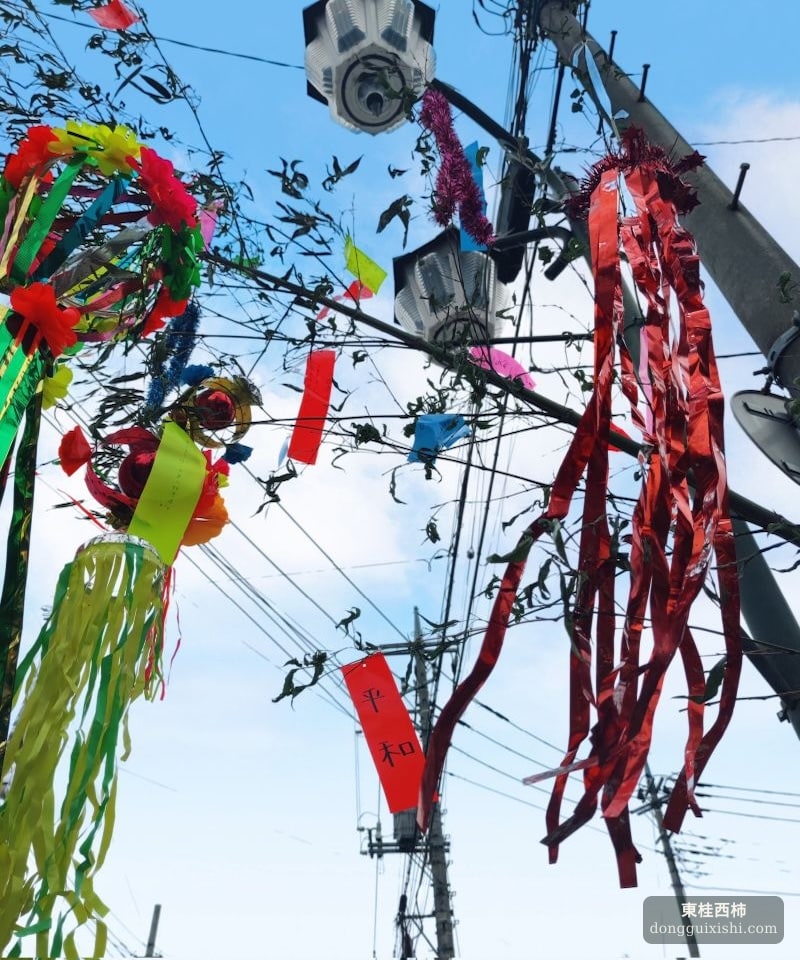
Japan’s Tanabata originated from China’s Qixi Festival, based on the legend of the Cowherd and the Weaver Girl meeting once a year. Although Tanabata came from China, over time the legend itself has become less central. It has developed into a distinct Japanese cultural event where people make wishes, celebrate harvests, and express gratitude toward nature.
I have been in Japan for more than a year, but I have not really joined or experienced many Japanese festivals or activities. Do I feel regret about that? Honestly, not much. My mind is still mostly focused on surviving here first.
Lessons from Living Overseas
Living overseas alone is never completely easy. There are two lessons I will remember: an apple problem, and a practical tactic similar to the old Chinese story of Tian Ji’s horse racing.
The Apple Problem
Suppose you have 5 apples. Two of them have already started to go bad in different places, and the other 3 will also begin to spoil as time passes. If you can eat only one apple per day, do you eat the good ones first or the bad ones first?
For an ordinary person, this is actually a survival problem.
You need to eat all 5 apples. You can only start with the bad ones, otherwise those 2 may become inedible later. The result is that none of the 5 apples tastes especially good, but at least all of them are eaten while they can still be eaten.
Some people may find this strange, but I now truly understand why this problem matters.
A Practical Tactic
When your Japanese is not good, your technical ability is ordinary, and your network is limited, you need at least three backup options before doing anything important. Then start from the option you want the least.
For example, if you are looking for work, first choose three jobs you are willing to try. Score them based on your overall situation, then apply first to the one with the lowest score.
Another example is renting an apartment. For foreigners who do not speak Japanese well, renting in Japan can be troublesome if you handle everything alone. The same tactic applies: choose three apartments you might want, ideally handled by different agencies. Score them, then first talk to the agency for the place you want least.
To put it plainly, for ordinary people like me, this is an effective way to accumulate trust or help others learn to trust you. You deliberately fail and make mistakes first, so you are better prepared for the next attempt.
Almost Getting a Ticket
In Japan, you can still sometimes see cars, motorcycles, bicycles, and pedestrians ignoring red lights. Cars and motorcycles are less common, while bicycles and pedestrians are more common. Overall, though, it is still much better than many other places, especially considering Japan does not have many surveillance cameras.
I am someone who follows traffic lights properly, whether at night or in the rain. But I am not completely obedient in every detail. Where I live, there is a small road outside. The nearest crosswalk on the right is about 100 meters away, while there is an intersection only a few steps to the left. Usually I just check whether any cars are coming and then cross directly to the other side.
One day this week, I did the same as usual. I was also in a hurry, so I did not notice that a police officer was on duty at the intersection. Just as I jogged to the corner and began to turn, I saw someone in uniform walking toward me while speaking.
I really did not understand what she was saying. I only caught one word: “change.” So I smiled awkwardly and blurted out, “Wakarimashita.”
She replied, “Arigato,” and instead of coming closer, turned away.
I continued jogging forward. Two seconds later, I finally understood what had just happened. That was close. I do not know whether my harmless smile won her over. Last year, a few people I knew received small police tickets. I have been lucky enough not to run into that kind of big trouble, though I seem to have had a tiny bit of smaller luck too.