
From Bertelsmann to Joyo and Amazon China: Product Lessons I Still Think About
The fall of an established player often happens because a so-called imitator catches the tailwind of a new era. That imitator may look a little crude, even offensive, to people who still carry the pride of the previous age. But it also clears space for a new generation. Many of those newcomers die young. Some are brilliant but short-lived. Only a few grow into the next era’s legitimate standard-bearers.
And so history keeps looping, almost like the double helix of DNA.
Last month I wrote an article called Shopping in Japan, Especially Online Shopping. In that piece I mentioned Amazon Japan. Today I want to talk about where Amazon China came from. I was among the earliest members of Amazon China because I had already been a member before it became Amazon China. If that story interests you, let’s walk through it slowly.
Bertelsmann
The story begins when I was in junior high school. A transfer student from a foreign language school joined our class, and my homeroom teacher asked me to help him settle in. We later became good friends. Through him, I first learned about Bertelsmann.
It was the first time I felt that buying and reading books could have a kind of style. He recommended me, and I became a Bertelsmann member.
At that time, Bertelsmann sold books through postal catalogues and mail-order networks. It was already highly advanced, and few companies in the world could match it. Looking back, the process sounds painfully complicated: reading a printed catalogue, filling out a postal remittance form, sending money, and waiting for the books. So why did this model become popular worldwide?
One reason, I think, was Bertelsmann’s almost perfect marketing system. More than ten years later, many companies were still playing variations of the same game.
- It created identity, status, and membership progression.
Membership went from ordinary cards to silver cards, gold cards, and beyond. These were beautiful physical cards, not cheap throwaways. I still keep my gold card.
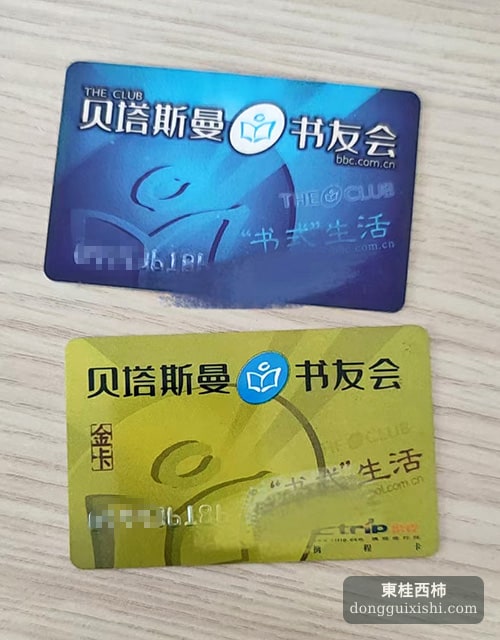
- It kept mandatory purchases within a reasonable boundary.
Members had to buy once every quarter. If you stopped, your membership would be cancelled. - It built mutual trust.
Customers chose Bertelsmann and trusted it enough to send money first without worrying that the books would not arrive. Based on that relationship, Bertelsmann also trusted its members.
If you missed your first required purchase, it would proactively mail you a recommended book. You could pay for it with your next order. If you never bought again and never paid for that book, Bertelsmann would not chase you. It simply treated the book as a gift. - It promoted with real generosity.
If you introduced a new member, you received a refined gift. I mean genuinely nice things, not cheap market-stall items.
I remember receiving a pair of mini speakers, which still work after more than a decade, a pair of dolls, a travel bag, and a few other gifts I can no longer clearly remember. - It cared about service.
Beautiful catalogues were mailed to every member on time. Every package used dedicated boxes, consistently and reliably. Under the technical conditions of that era, making so few mistakes was genuinely impressive.
I remember only one small issue. I had bought quite a few books, and one of the books I received was not the one I ordered, though the price was the same. - Its promotions were simple and well-balanced.
The marketing was not confusing. There were special prices, buy-more-get-something offers, and percentage discounts after a certain amount. That was about it.
When the Imitator Arrived
After I entered high school, a domestic competitor appeared: Joyo.
Joyo’s catalogues were obviously not as polished as Bertelsmann’s. It had no membership cards, and the packaging was not standardized. Yet it quickly claimed a place in the market. I think there were three main reasons.
- Bertelsmann had already educated the market.
- Joyo had no threshold. Anyone could buy.
- It clearly targeted students and added small accessories and related categories.
Then E-commerce Arrived
Later, e-commerce developed rapidly. Online shopping opened people’s eyes to a completely new world. Bertelsmann, however, still held onto its elevated, elite path. It quickly declined because it failed to adapt to a new technological shift.
Joyo, on the other hand, was a young company. It had little burden from the past, so moving into e-commerce felt natural.
While Taobao and eBay EachNet were fighting fiercely, Joyo stayed quietly in the capital and lived at its own pace.
Amazon Enters the Story
Then Amazon rose in the United States and became a giant. Naturally, it wanted a piece of China’s huge market.
But entering China quickly and gaining a foothold was not easy. As the saying goes, even a powerful outsider cannot easily overpower local forces. Amazon understood this very well. At the same time, Joyo also wanted a wealthy backer. Otherwise, it would either linger weakly or die outright.
So the two companies found each other, and the merger happened quite naturally.
That is how a new player suddenly appeared in China’s e-commerce scene under the name “Joyo Amazon.” A few years later, presumably after the agreement period ended, Joyo Amazon officially became Amazon China.
A Side Note
Now the logic becomes clearer. Why did so many early online shopping giants start with books? Because their ancestor, in a sense, was Bertelsmann.
Joyo was honestly not that impressive. I still remember ordering an ivory pendant necklace that never arrived. I called customer service to resolve it, but the phone service fee was absurdly expensive. In the end, I lost both the item and the money spent chasing it.
Amazon also misread the market. Combined with poor localization, Amazon China never achieved anything close to Amazon Japan’s position. After JD.com emerged, I stopped buying from Amazon China. Now that I live in Japan, Amazon Japan has once again become one of my main online shopping channels.
Many things are genuinely interesting. They often turn out differently from what we expect, yet in hindsight they also seem strangely inevitable.
A Final Thought for People Building Products
When we do things, or more specifically when we build products, the story above may remind us not to worry too much about the following questions.
- This idea is not new at all. What is the point of doing it? What future could it have?
- Someone has already built this. If I do it again, there is probably no hope.
- This market is already saturated. What future is left?
- If I am going to build something, it has to be something the world has never seen before.
In reality, markets are not decided only by who did something first. Timing, audience, channels, execution, and trust all matter. Sometimes the later player is the one who rides the real wave.